
i had a wonderful time taking photos of this mother & daughter. Annie & Amber are both beautiful and full of life, as well as looking so much alike. there is definitely no denying the relation!
i am in love with the spot where these were taken. i loved the old fence that you can see just behind them in a few photos. i joked that the tree in these pictures is the only evidence of fall in the whole state of Florida. i am so glad we were able to document it.


just in case you aren't familiar with the phrase i used as the title of this post here is an explanation as given by The Phrase Finder:
Meaning
The exact likeness.
Origin
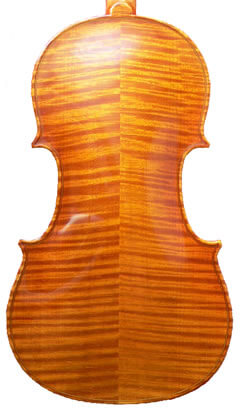 One of the very first questions that was asked at the Phrasefinder bulletin boardMade in England: was about 'spitting image'. There have been numerous such queries there since and some ask if the term was originally 'splitting image', i.e. deriving from the two matching parts of a split plank of wood. That's a plausible idea. The mirror image matching of the grain of split wood has long been used in furniture and musical instruments for decorative effect. The technique is known as book-matching and the resulting pattern is called fiddleback - for obvious reasons. The theory has its adherents and dates back to at least 1939, when Dorothy Hartley included it in her book
"Evenness and symmetry are got by pairing the two split halves of the same tree, or branch. (Hence the country saying: he's the ‘splitting image’ - an exact likeness.)"
As so often though, plausibility isn't the end of the story. The numerous forms of the term 'spitting image' - spit and image, spitten image, the dead spit of etc., appear not to derive from 'split' but from 'spit'.
Some commentators have suggested that 'spit' may be a corruption of 'spirit', but that appears to be fanciful and isn't backed up by any early examples of 'spirit and image'. The allusion is more likely to be to someone who is so similar to another as to appear to have been spat out of his mouth. That idea, if not the exact phrase, was in circulation by the end of the 17th century, when George Farquhar used it in his comic play Love and a bottle, 1689:
"Poor child! he's as like his own dadda as if he were spit out of his mouth."


No comments:
Post a Comment